Thursday, February 23, 2017

Connecting the dots (aka proteins)

The lab today was made up of two parts. The first part of the lab consisted of reading blog posts to get a more complete understanding of permeability. Through the writings Dr. Rita Levi-Montalcini, we were able to connect the ideas of permeability beyond the the natural world and into the way that thought and ideas can permeate in a group of people.

In the second part, we designed and built a phospholipid bilayer out of Zometools. It was difficult because we weren’t allowed to have straight lines, but through experimenting and trial and error, we were able to use the straight tools while creating a model that was more like real life. Textbook phospholipids are straight, flat and rigid whereas the ones in real life are not straight at all. The best part was fitting in the permeating proteins because one of them we actually attached to the structure but some we realized could just be placed in because they fit so nicely.

While building our membrane and protein out of Zometools, we found ourselves incorporating many of the words we later chose on the list. When building, we experimented and tried various different shapes for our creation. We comprehensively connected this building to the study of membranes, proteins, and permeability from class.

In this lab we went out to create a phospholipid bilayer the main difficulty was to try and create a symmetrical yet functional piece that formed the correct shape. Connecting the individual structures we created with the Zometools allowed us to expand our structure. In the end, our structure was a big collaboration of different sizes phospholipids with a couple of large proteins extending through it. We demonstrated the permeability of our structure with another structure by passing one through the other.

However through sheer force of will we were able to create something new and amazing. We were able to create a structure that was both functional and also able to support the proteins within it. Another particular obstacle was making it permeable and structurally sound.  

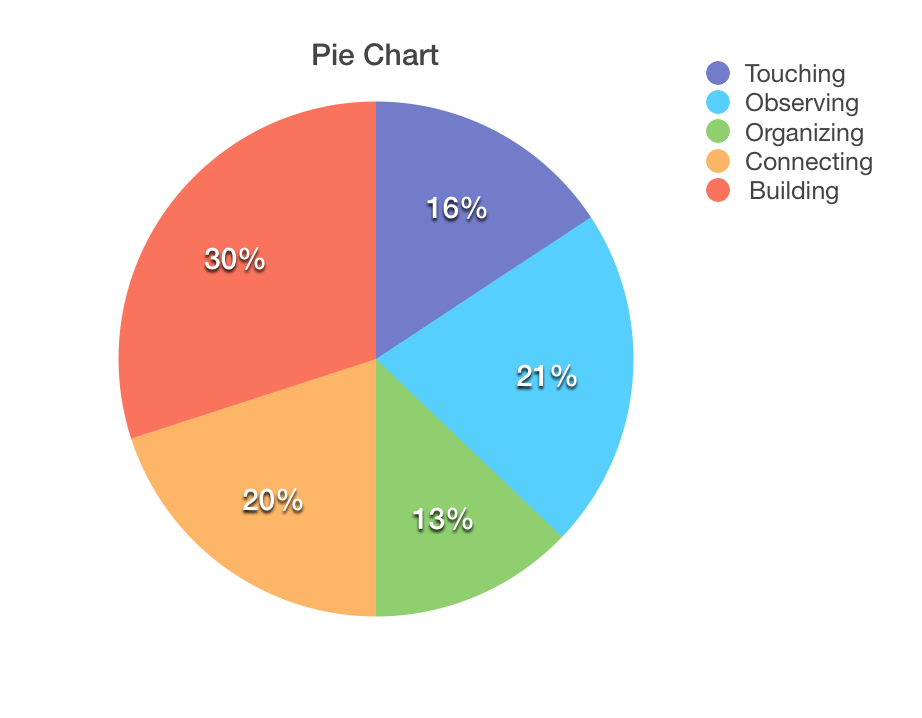
Today, we had to read articles that enhanced our understanding of permeability from the perspective of art, not just biology. We chose the words laughing, building, connecting, observing, and experimenting because that is what we did during this experiment. We worked together to connect the zometools to build proteins and a phospholipid bilayer. We experimented with different shapes and forms and observed each other, accepting constructive criticism from one another so that we could improve on our work and move forward as a group. We were laughing all the while; maintaining a positive attitude is the key to the power of play, it stimulates curiosity and enhances understanding.

<unnamed.png>

Creating a cell membrane


The focus of today’s lab was to create a permeable structure using sticks and balls. But before we started creating the structure we read several articles that expanded our definition of the word permeability. While reading the first article we realized that human beings can also be described as permeable. For example, someone that is open and has an inviting personality can be seen as permeable just as a tablecloth can be seen as permeable. After thinking about the meaning behind the second article we saw that there is a connection between the rocks holes and the permeability of our thought processes. A permeable brain is a brain that allows different ideas to flow in it and this allows us to grow as people.

Once we finished reading these articles we spent a lot of time planning out how we wanted to build the structure. Three different structures were built during the process. Two membrane structures and one protein was created using a series of patterned stick and ball formations. Once each was individually constructed, our group then proceeded to connect all of the structures into one working system. At first our group was a little confused when deciding how to begin. Should we all start arranging one cohesive structure together? Or would it be better to work individually and then connect them? We found that the best way was to split the process. We had two membrane teams and a protein team. We knew that proteins were imbedded into  membranes so that was why we bonded those two together. One membrane was placed at the top of the structure and the other at the bottom. The protein stood between the two. In the end the molecule resembled one unit. The three parts were not distinguishable.


Model building: an exercise for the hands, eyes, and mind

Today, what we did in lab was mostly based on the materials we learned last week and this week, semi-permeable phospholipid bilayer membrane. Therefore, we used zometool kit to build a version of semi-permeable phospholipid bilayer membrane.
    
Throughout the process, our group examined how this interaction between materials relates to concepts of permeability, and how permeability can be applied to our main focus this semester: making the invisible become visible. A visible form would be the phospholipids and their interactions with the proteins. We started off doing everything in pieces, eventually putting together the individual parts into one whole membrane. The protein was the hardest part to make, and because of that, we left it last.

            Permeability is the exact state of a given material that allows the absorption of liquids, gases and other chemicals through the object’s membranes. Permeability and porosity, although similar as both allow for the passing of liquids, are slightly different. Porosity, is the measure of the amount of space in the object in which the liquids or gases can pass through. Examples of this would be cracks, holes or small cavities in the object. Permeability is how easily the liquid or gas passes through said cavities. High permeability allows the fluids to move more efficiently and quickly through the rocks. An example of a rock that is permeable would be sandstone because that particular rock has grains in which fluids can pass through more easily than other types of rock.

In relating to our topic on shapes and patterns. The phospholipid bilayer is a recurring pattern in nature. This is helped as it is made with hydrophobic and hydrophilic ends. These two ends form the pattern of the bilayer and it is one of nature’s own patterns. The bilayer needs to have a specific pattern and shape to allow materials through. These proteins give the bilayer the ability for it to actively and passively transport.


Overall, in this lab, by making a mini model of the phospholipid bilayer visually, it helped us provide a better understanding of how the model comes together and interacts with all of the pieces.

Semipermeable Phospholipid Bilayer Membrane 3d Model


This lab offered an interesting perspective on semipermeable membranes as it provided us with a visual example of the bonds between the phosphate groups along with a visual example of the protein that is embedded in multiple phosphate groups. The first step in the production of the semipermeable membrane was the idea of creating a few different phosphate groups which were visually represented by the different colored zometool sticks. Each phosphate group was assigned a certain color and that color stayed consistent throughout the entirety of that particular phosphate. The next step was the connection of the different phosphate groups through the glycerol fatty acids. Once the different phosphate groups were connected the protein was embedded and connected into the membrane.

In terms of using the description words and how they applied to today's activity, the idea of connecting and organizing the phosphate groups was certainly a characteristic of today's exercise. Along with connecting and organizing, imagination was also a very key characteristic of today's exercise as it took us a good fifteen minutes or so to be able to conceptually visualize what the semipermeable membrane would look like upon creation. Once we were able to visualize what it would look like, it certainly took a fair amount of planning, talking and reasoning to physically connect the phosphate groups together. Lastly, the words that were most commonly used in today’s lab were certainly the words, organizing, communicating and connecting. These words all relate back to the idea of what a semipermeable membrane is in the first place; through the bonds and connections and organization of the phosphate groups, which make up the membrane, the proteins embed themselves into this membrane in seemingly random pattern however, at the base of it there is a highly complex level of organization.       

Screen Shot 2017-02-22 at 5.38.44 PM.png

Constraints and innovations


There were many constraints that came along with this lab. One of the first things that we encountered had to do with the size of our team. Communication and planning, especially with drafting up a sketch of our model, became more difficult. It was harder to stay connected with some of us working on different aspects of the project. Some of us would be working on individual amino acids while others put together more complex proteins or constructed the membrane. We had to also work with the constraints of the zometools. There are only certain ways in which we can connect them to one another. After our initial sketch, we had to attempt to build it before redrafting to create something that worked with our zometools rather than against them. We had to choose the right sizes and arrange them in a way that they could actually attach to one another. We innovated by sticking to our jobs and cooperating with one another to create the plan we imagined. We made sure that we talked throughout the process to ensure that we were all on the same page while our phospholipid bilayer membrane and permeating protein were constantly evolving. Another difficulty that we encountered was carefully making the protein permeate the phospholipid bilayer. The pieces are delicate and prone to falling apart. When we were connecting the membrane around and through the protein, we had to be sure to be extremely delicate.

Overall, this lab was fun in the way that we had to be organized in our approach and work through the problem thoughtfully as a team. Because one of our constraints was that we were not allowed to have straight lines, Kerry and I made sure that we put the lines into the balls at certain angles. We utilized lines of all sizes to make sure everything was connected. This required some approximate measurement on our part. Overall, though, we didn’t have many constraints except for the size of the materials and restrictions of what qualifies as a phospholipid bilayer membrane. Our innovations came from making sure that our membrane was able to hold the protein we initially built.

<word graph.png>

Laughing and Thinking, the basis for our labs

Several of these words describe how we work as a group. Laughing is one of the biggest verbs that can describe a majority of our labs. A part of building with the zomtool kit is that sometimes it falls apart, and we laugh out our frustrations by diving back into the reconstruction. 

"Comparing" is another word that we use simply because we are often comparing our different constructions together to see what we are each coming up with. We also compared our lipid to models we found online and used that as a guidance for our construction.

"Thinking" is probably the basis for all our labs. We have to think about how we are going to build, what ways we will build, what parts are working for us, and what isn't. 

We had to handle pieces gently, and make sure that they are in a position that was not unstable, but also stayed true to structural model we found online. PS: Sally has rather large hands, which is why we don't allow her to physically manipulate the zometool kit model; she does provide insight and points out where we can improve. 

<Messages Image(185628155).png>

Wednesday, February 8, 2017

Connecting ideas


In lab today we created monomers and then put them together to create polymers. In doing this we were able to see patterns as well as variations in certain structures. We also had to think in creative ways to figure out how to connect our monomers. In the picture below you can see a symmetrical polymer with no variations from monomer to monomer.

The pattern can be obviously seen in this polymer as each monomer is exactly the same as the previous one. 

This next polymer has a less obvious pattern, even though each monomer is the same there are variations in the way they connect to each other because they are rotated in different ways. 

These variations resemble the variations in DNA, DNA is a helix pattern but a variation could cause one monomer to connect differently to the next. And then one organism could be completely different because of this variation.

The next polymer does not have a distinct pattern:

Even though we cannot see a specific pattern it does not mean that there isn't one. If you spend enough time observing this polymer you could find a pattern or series of commonalities between some of the monomers.

The article we read at the beginning of the lab explained that the purpose of using legos to create monomers in this lab was to help create a better understanding of how monomers work and it also was supposed to create a fun way for students to learn about monomers and patterns. This lab was fun to do, using legos also helped us to engage our creative sides in lab which is usually left out of science class.