Tuesday, January 24, 2017

Hands on science

Playing can help the mind expand through creativity and problem solving. Working with a group allows one to see things from a different perspective. By working with the Zometools, we were able to see that there are no straight lines with organic subjects ourselves rather than reading it from a textbook. Working with toys to understand a concept through personal experience helps with memorizations because you are more likely to remember something you enjoyed. When a group of people play, they work together to achieve a common goal. Playing is more fun and gives us a bit more motivation to achieve that goal. There is less argument and conflict because it is in a stress free environment and feels more comfortable taking chances that might lead to a breakthrough.
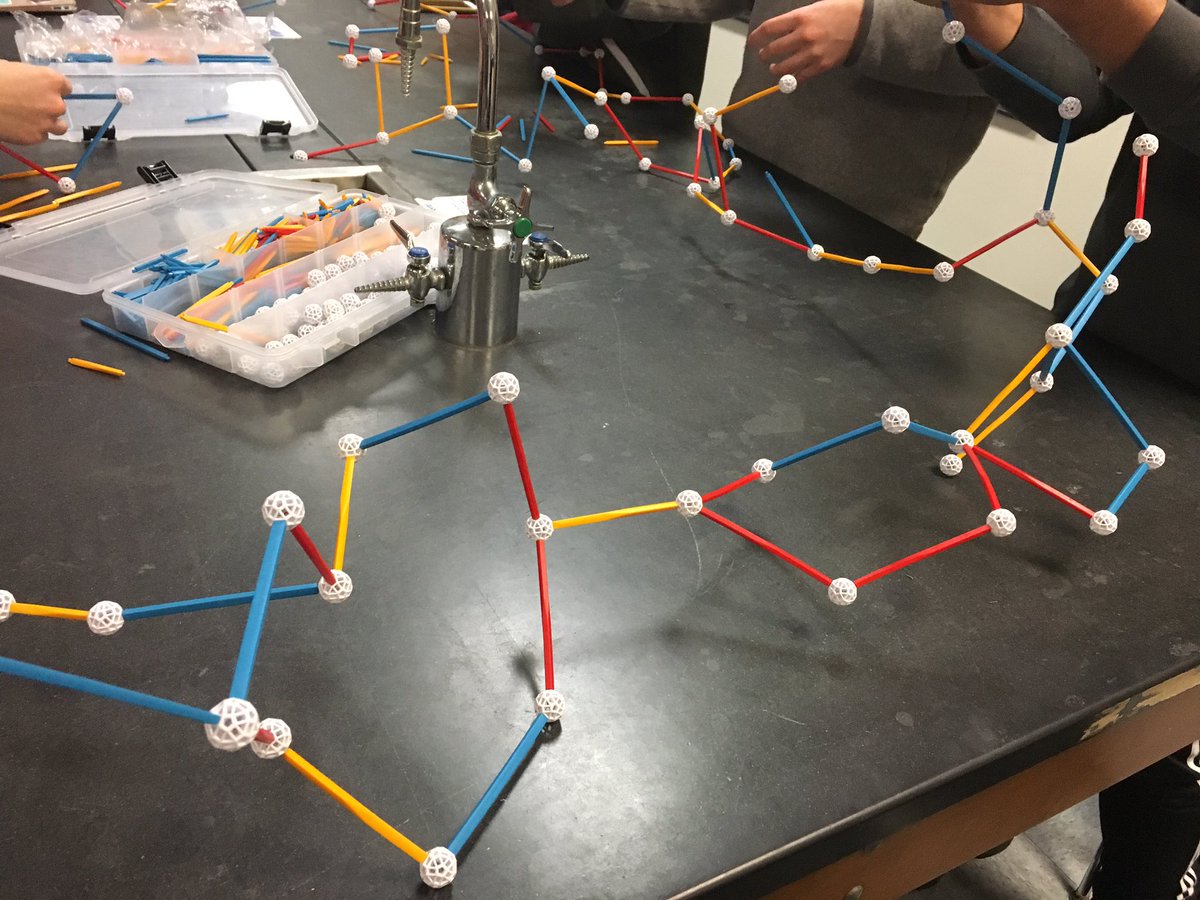

Playing does not exclude work. When you have to work through a problem the easiest and most organic way to work through a problem is to start playing with the solution. Once you have a starting point how the solution is created is through a process of playing a round with different paths and seeing which ones fit and get you closer to the solution and which sets you farther back.  The only way to get to know what works and what doesn't is to play around and figure it out through experience.


Playing falls under the emic perspective because of the discoveries made while playing. With this activity in particular, there was a lot of experimenting. Sometimes pieces had to be moved around because they didn’t fit together physically or they didn’t fit the criteria. It would have been easy to build a plane if it were flat because the piece would have all fit together exactly as they were expected. Physically building a large scale plane shows that even with straight lines, structures can be flexible (even though there are no straight lines in cells).  By playing and creating our own experiences, there is a better understanding of how nature actually works. The zometools help exemplify the natural occurrences of our environment and help to reshape our thinking that nature is not so black and white.
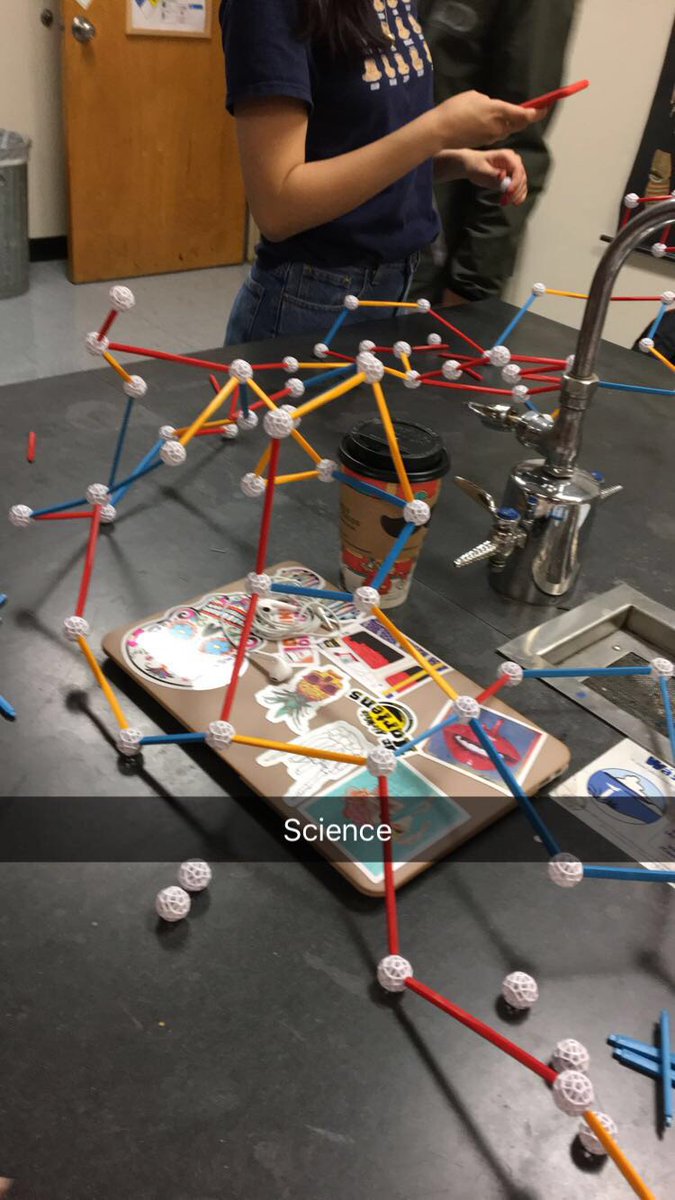


People play to learn from their environment. Often seen in the wild by playing animals learn important survival skills. Playing is a way to cultivate experience without the danger of actually entering the world. Lion cubs for example will often play with their siblings and through this they learn important hunting techniques. Playing creates experience that formulates further growth. Similarity Zometools for example let us play with the idea of creating a surface and give us an idea of what it would look like and how we would go about it. Playing again creates experience and this is why playing is so important.
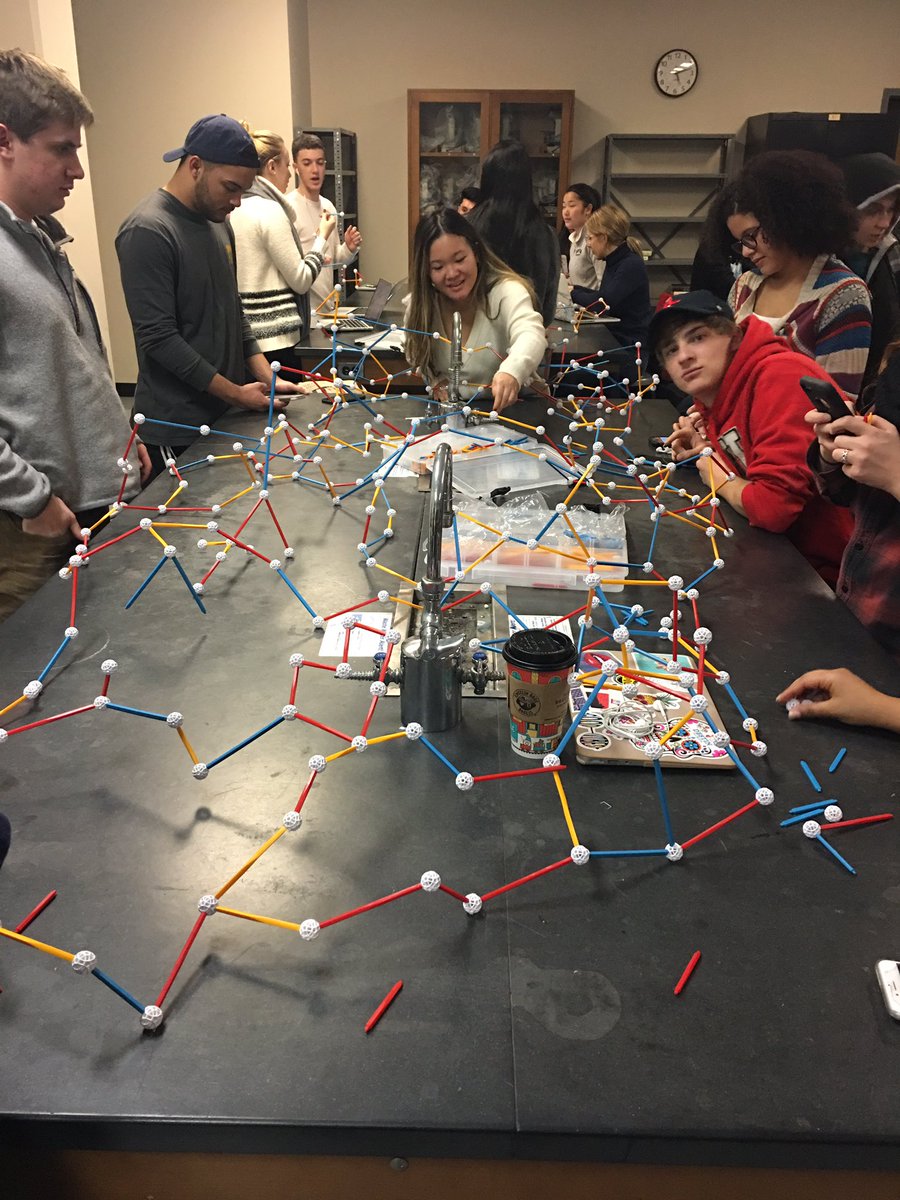

As you play and experiment, you often find yourself discovering and learning new ideas about life and the natural world. For example, our group started building our planar structure with Zometools somewhat randomly. We had a basic plan, but moreso were simply building for fun. As we continued to build and grow our structure and as we continued to play around with the pieces, patterns began to emerge and we began to discover something about the nature of cell membranes. This happened somewhat by chance. As our structure got bigger, it became quite flexible, but also remained very solid and strong. As professor Hammer helped us understand, the nature of the cell and its membrane in nature holds a body similar to the structure of our Zometools structure. Ultimately, our play with the tools aided in our process of discovery and allowed us to learn and discover new concepts about the world around us. Interaction with other members of a group allows for a broader vision. Building off of the ideas of others promotes a kind of creativity that would otherwise be limited to a singular mind. The learning process is much greater but sped up significantly because multiple minds are at work together. As an individual you can visually witness the learning processes of others and therefore build your own in accordance.

Stick Patterns

Today in class we used sticks and balls to build a structure that  would cover the whole lab table. To conquer this task, our group began by creating individual structures that we eventually connected. From our individual structures we noticed that some patterns began to emerge. The most common pattern was that people tended to use the same color sticks when beginning their model. Another pattern that became evident was that people were building in an up-down form. A pattern is a design that occurs more than once. Patterns develop in all different shapes, forms and sizes. Some patterns are more visible than others depending where they are. In other words, a pattern is a recurring characteristic or trait. In terms of nature, this is where patterns originate. From the patterns on the fur of an animal to the patterns molecules form. It almost gives nature a structure and a form. Patterns are what keeps nature in tact and gives it a seemingly clear perspective. Many of the patterns that humans believe they created are actually replicas from the outside world.


image1.JPG

All patterns are derived from nature. From the patterns on the fur of an animal to the patterns molecules form. It almost gives nature a structure and a form. Patterns are what keeps nature in tact and gives it a seemingly clear perspective. Patterns develop in evolution as each new generation of species is based upon the previous one, continuing the different characteristics and patterns of each ancestor. After a few minutes of working on our structure, we noticed a pattern forming. The vast majority of our group used one ball to connect two sticks and made sure that there were not any straight lines. Also, half of our group used one color for all their sticks and the other half used random colors in general. Patterns sometimes emerge because people are used to doing things a certain way and don’t change their habits in order to maintain some type of control and comfort. For example, in this lab the majority of our group members used one ball to connect two sticks because it was a lot simpler and less time consuming.

Exploring Evolution

Exploring with Zometools in lab, our group considered constraints and innovations that related to the process of building, creation, and growth. Our group immediately jumped into the process by working together towards creating our final product. While the team pieced the Zometools together, it became more apparent that there in no fine line in finding an end point to a "final product."


Consider the Zometools as an environment. The environment consists of white polygonal balls and colored sticks about three inches long. The balls and sticks interact in the environment and are able to connect to build a complex thing. The more the team expanded on th eproject, it became more and more evident there would be no clear stopping point, with the exception of running out of resources.


Our small-scale construction project with Zometools relates to evolution. While there is never a final product or stopping point in evolution, there is also no clear stopping point in creativity, building, and innovation in our learning and exploration with the toys.


While the Zometools provide a theoretical application of the fact that things never really do stop evolving, humans are a real life example that things never stop evolving. It is cool to see that even though we are at the top of the food chain and dominate every other animal, humans evolved to beat the Black Death back in the 1300’s. The people that had a mutation of their genes that allowed them to be immune to the disease lived on and had children while millions and millions perished. Another example of the evolution of humans, particularly in America, is the fact that 75% of Americans can drink milk. According to the US National Library of Medicine, "Approximately 65 percent of the human population has a reduced ability to digest lactose after infancy" (page 1). These two examples show the fact that even complex things like humans are still evolving, pretty much proving that things never really stop evolving.


US National Library of Medicine. May 2010. Bethesda, MD. [January 17, 2017; January 23,           2017]. https://ghr.nlm.nih.gov/condition/lactose-intolerance#statistics.

Leaves that are larger than life

Before we started building our model, we looked at pictures of the surface of leaves under microscopes. This specific image interested us because it is fascinating how from a distance, the surface of a leaf is smooth. However, when you zoom in you see that the surface is actually very jagged. Our discovery showed us how things can be hidden behind visible signals. Visible signals are the living organism because you see live aspects such as movement. Behind the visible signals of the living organism we can see the cellular makeup and observe the many components that come together to form the organism and allow it to function.


During this lab our goal was to avoid making straight lines because we wanted our model to be unpredictable. Similarly, real cells do not have straight lines, which also follows the surface of a leaf. Therefore, when we were building our model we decided to build the components separately because we figured working independently would be the best way to avoid making patterns since everyone thinks differently. In the end our model had parts that reflected everyone’s own interpretation of the jagged surface of leaves.


Although science textbooks constantly depict pictures of linear plant cell models, in reality they are much more flexible and uneven. The scientific community believes that it is easier for children to learn plant cell models as linear. As a result, there is a foundation of slightly incorrect science in our young lives. Exposing our minds to the ambiguity of plant cell models, makes the invisible visible. Before the truth of plant cell models was invisible, but now we are enlightened with all the possibilities of cellular structure.


Monday, January 23, 2017

Making the invisible visible

Here's a post from one of my student groups in response to today's lab.

When we started the lab, we weren’t sure which structure to create, but we soon gathered some inspiration from google, by searching the suggested images and creating our own shapes.  We started by - incorrectly - creating a voluminous structure that was tall and random. We switched gears to make the structure the size of our lab table, and all of the patterns that emerged in our tall structure were spread before our eyes. To elaborate on our process, we worked independently for 5 minutes or so at a time, and then we would attach our shapes together, to create a larger, planar surface. Each shape wasn’t much on its own, just a few sticks put together, however, together they formed a planar surface that I personally believe resembled hills and valleys. In other words, we took invisible shapes and put them together to form one large, visible shape.


Creating this structure helped us conceptualize how easy it is for things to become invisible behind something that is visible. As the structure began to form and as it grew in dimension, we noticed that the outer surface became easier to visualize. We also noticed that the smaller pieces of the zometools appeared to be more invisible as the larger pieces began to form around the perimeter of the shape.


Expanding on how our structure relates back to our topic, in our lab, we created a planar surface using relatively basic tools. Just looking at the tools, pre-stucture, you don’t see a cohesive shape, you see only sticks and balls. However, after spending an hour attaching the tools, we, in essence, created something visible from something invisible. We created a tangible object, which resembled a flat, planar surface, out of isolated sticks and balls, thus creating something from nothing.


However, I realized that after creating something visible, there’s no way to expect the same perception from everyone. Just because you’ve created something that can be seen, doesn’t mean that everyone will see the same thing; thus, arises the concept of “what happens when something is seen”. I believe that when something is seen, everyone perceives it differently, which allows creativity and intellectual stimulation. Furthermore, I would argue that visibility/invisibility depends largely on perception. For instance, I believe that by creating a planar surface out of basic tools, we created visibility from invisibility. However, some may argue that sticks and balls have their own cohesive shape, so all we did was transform what was already visible into a different visible shape. So, because visibility depends on perception, some people will see something where others don’t, and vice versa. Continuing with this theme, I believe that when something is invisible, it is more or less hidden only by a feeling of functional fixedness, or a reluctance to look outside our comfort zone. For those who see something in anything and everything, then nothing is invisible to them, because they are able to create something out of nothing. But for those who look at an object, and see only what that object is supposed to be, then to them, the entire potential of the object is invisible, as they see only what they want to/are used to seeing.


The Power of Play

Here's a post that one group of students wrote in response to our first lab this week. 

This week's lab truly exemplified our groups topic of "the power of play." As a group, we learned more about the topic of cells and solidity and permanence. While we performed "parallel play" (working silently alongside each other yet together as a group), we learned together as a group. We also learned that zometools are not as easy to use as one might think. Playing with these tools though showed us how something that seems like it might be rigid can end up being less defined than we thought. For example, our structure is not rigid, it moves and shakes similar to how a cell membrane might.


Our first decision as a group was to work separately and start building parts of the figure on our own. After each of us had a strong and solid figure, we came together and connected them all. We were surprised that it actually worked and came together, but there were struggles as well. How wide did we have to continue to build? Would the zometool maintain its balance and strength as we continued to build inward? To answer “what do we accomplish with play,” we could say that we were having fun building with the zometools while simultaneously using our brain to create the structure and connect it to cells and science. It is interesting how the mind feels when you are playing with ideas and suddenly inspiration strikes. This happened to us as we were creating our structure. Although we were silent, our minds were racing thinking of new ways to build and relating our structure to microscopic organisms.


To answer the question, “How does nature ‘play’ to solve problems?” we considered the evolving of organisms. Not that they literally play and therefore evolve, but over time their genetic makeup and behaviors change slightly one way or another, playing back and forth between options to see what would work best. Similarly, our group tested out different methods of creating our zometool structure to see what would be the most effective. 


We do believe that playing precludes work. Whether you are scribbling ideas down in a notebook, sketching a model, or tossing ideas around in your head, you are taking steps to create better work. You cannot begin a project without first toying with ideas. 


Playing allows us to ease ourselves into thinking about bigger concepts. For example, we would have not been able to grasp the concept that Professor Hammer explained in his blog without physically creating a structure to back it up. It helps to have different ways to learn (reading and hands-on activities).